On this last day of Women’s History Month and my last day as Women in STEM (WiSTEM) Executive Director, it is only fitting to reflect a bit on the past 25 years of my time leading Women in Engineering Program (WEP) and WiSTEM initiatives. It’s been a total of 27 years at UT Austin (not including 5 years as an undergrad)… what a glorious journey I have had the privilege of being part of!
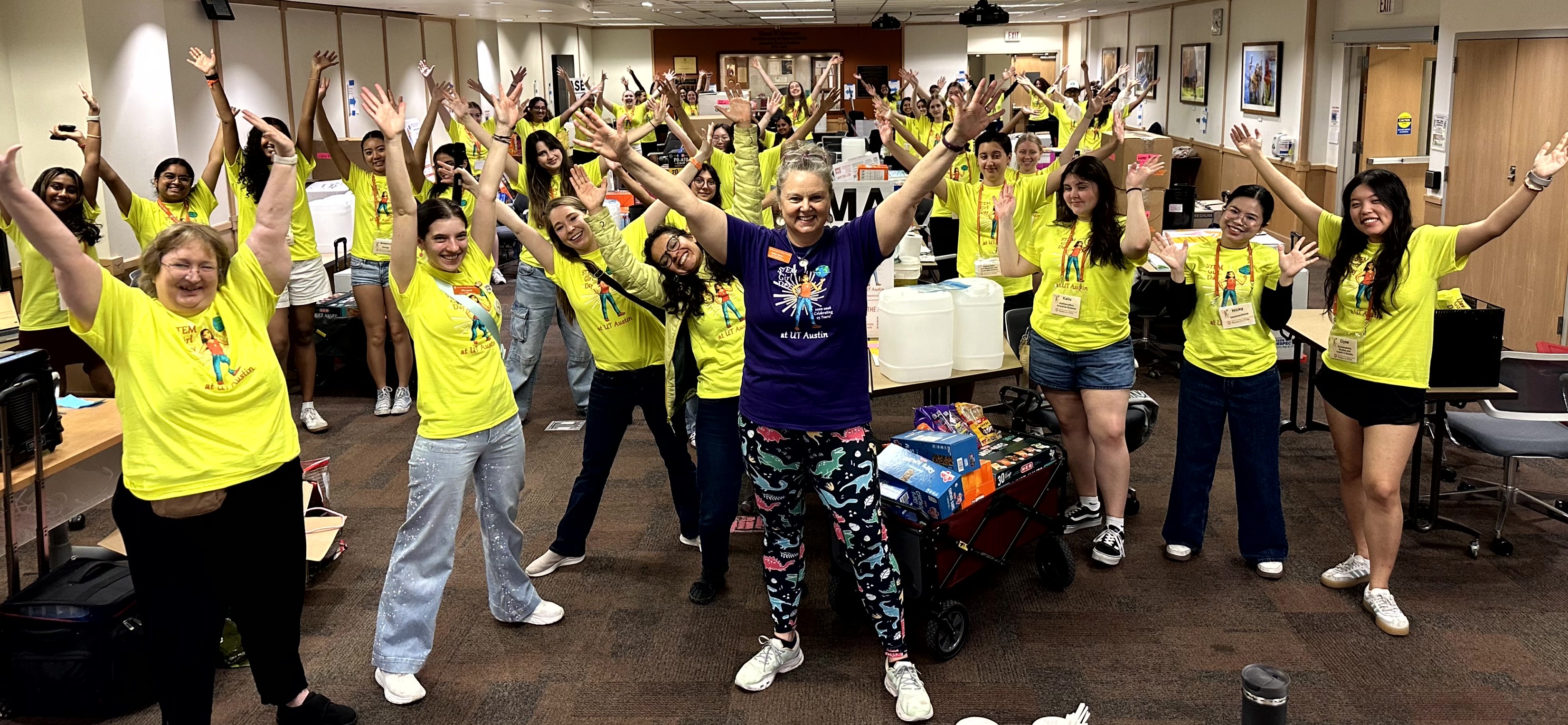
One year ago, I shared that I was retiring and a bit of the why. It’s been challenging over the past several years to authentically lead the work I’m passionate about, successfully navigate legislative attacks, sustain funding to keep programs running as companies react to federal bullying, and create and grow programs that have a wide-reaching impact on student success and the pursuit of STEM pathways. It’s time to embrace my full voice, power, and energy.
It’s taken a year to get to this point, with a good portion of time spent hiring new staff and leading WiSTEM and the new team through university organization changes (a book for another day!), the dissolution of the college in which WiSTEM had been housed, and the shift to the College of Natural Sciences. And it has involved supporting the new team as they take the lead on all WiSTEM programs. They are passionate, curious, and creative. They are student-focused and excited to take on all that it means to be a WiSTEM staff member and to be part of this unique, special, and oftentimes challenging yet incredibly rewarding community. I’m excited to be a WiSTEM volunteer and massive advocate moving forward.
Now…a look back on 25 years advancing gender equity at UT Austin (and yes, gender equity = equity for all, supporting all students, fostering an environment that welcomes any and all students into STEM spaces, a place where everyone feels like they belong…and so on!)….
Advancing Women in Engineering and Women in STEM at UT Austin
My connection to the Women in Engineering Program goes back even further than my role on staff. I first worked in the WEP office as a chemical engineering student in 1992–1993, the very years the program was founded.
Nearly a decade later, I returned to UT Austin after six years at Dow Chemical and began what would become a 25+ year career shaping programs that support women in engineering and STEM.
During my tenure as Director of the Women in Engineering Program (2001–2021), the enrollment of women in engineering reached historic levels.
First-Year Engineering Enrollment
• 2001: 22.1% women (254 students)
• 2021: 34.1% women (496 students) — the highest number and percentage in Cockrell School history at that time
Overall Undergraduate Engineering Enrollment
• 2001: 22.2% women (1,051 students)
• 2021: 31.1% women (1,925 students)
During this time, I helped welcome over 7,000 first-year engineering women to the Cockrell School while expanding programs that support student success, leadership, and community.
The Launch of WiSTEM
It began as a “what it” conversation initiated by my longtime colleague, friend, partner in powerful programming, and then WEP Assistant Director, Ana Dison. As support within the Cockrell School had sharply shifted, it was time to dream big and act boldly. The big, bold idea? Take our WEP success and expand to support STEM students campus-wide. We crafted a plan, made the case, and pitched the idea to strategic leaders on campus. After months of negotiation (super fast in highly bureaucratic university time), we had the approval to move forward. How amazing that Ana and I got to create a new program on campus that would have such an incredible, widespread, and hopefully long-lasting impact. We had such a unique opportunity to take our powerful programming, unique leadership skills, and dreams of even greater impact into a campus space that valued all we had to bring and could help us launch and grow to reach more and more students each year. Thank you, Dr. LaToya Smith and the DDCE community, for embracing us!
WiSTEM’s Launch Announcement: In fall 2021, Women in STEM (WiSTEM) was founded as a newly created initiative within the Division for Diversity and Community Engagement (DDCE), the campus-wide unit that supported and promoted diversity, equity, and inclusion at all levels. The creation of WiSTEM, supported by UT President Jay Hartzell, recognized the expanding presence of women in STEM across the university and the critical need to educate and expose students to transdisciplinary, holistic experiences that increase sense of belonging, STEM identity, and STEM self-efficacy (confidence). Women in STEM (WiSTEM) was created to focus on K12 outreach and STEM education, reaching 12,000 K12 students, as well as 12,000 families, educators, and community partners annually. WiSTEM would also engage our University community of over 12,000 current undergraduate and graduate women in STEM majors with career and leadership programming and role-model and mentor engagements.
Raising Funds
WiSTEM is a self-sustaining unit of the university with programs open to all students, regardless of gender. WEP was also a self-sustaining unit during my tenure as Director (it is no longer). What does that mean? FUNDRAISING!
I’ve raised over $12 million over the past 25 years! That may not seem like a lot to development officers out there. But my job title was not “development officer”. Still, I had to raise the funds each and every year to pay staff salaries (including my own), student staff salaries, program expenses (including UT Austin parking garages, custodial services, and landscape services for STEM Girl Day), countless technology fees to exist on campus and access wifi, any and all technology, and anything else you can think of that a small business or nonprofit would have to pay for other than actual office space and utilities.
WiSTEM operates basically as a non-profit with the benefit of the name “The University of Texas at Austin” behind it. Salaries aren’t appropriated by the state. We don’t receive funds from athletics. We have to ask colleges and schools for donations and hope for a helping hand with funding. We write lots of grants, engage in constant corporate and industry relations, and participate in individual giving campaigns such as the university’s 40 for Forty.
This funding scenario is probably part of why WiSTEM still exists! WiSTEM is super frugal, highly efficient with budgeting, and has the reach and impact it has with just a tiny staff of 4 because there are no funds to hire more people. But… fundraising to ensure you can pay your staff and continue hosting free events, such as STEM Girl Day, which alone costs us $200K annually to run, can be a challenge. Can you help?? (This is my fundraising plea!)
Wondering where you could donate and make an incredible impact with your investment? Consider WiSTEM!
STEM Girl Day at UT Austin
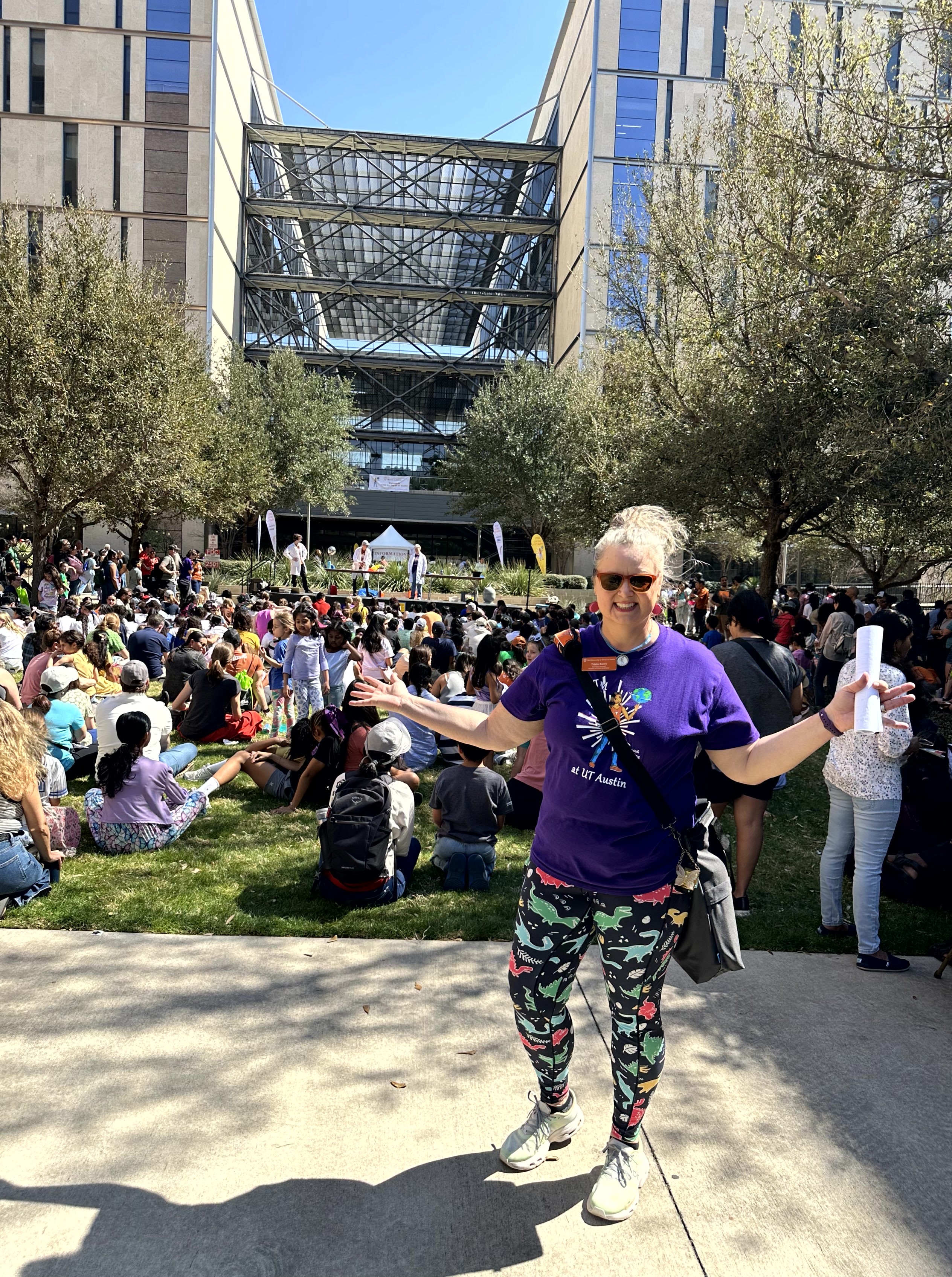
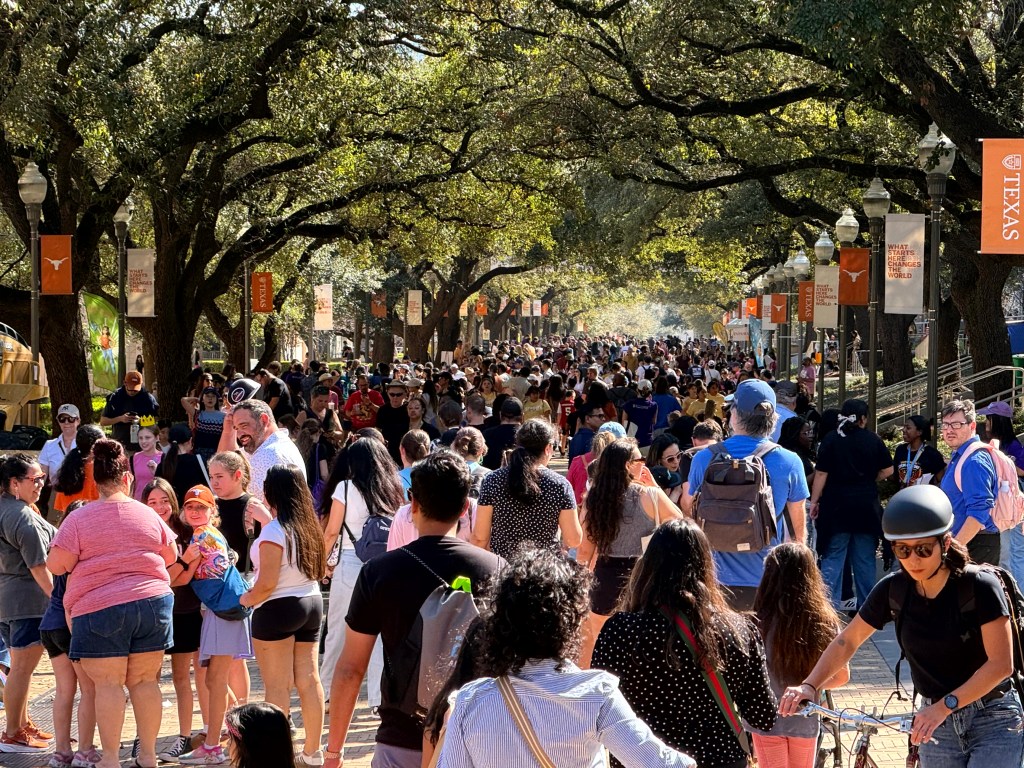
One of WiSTEm’s most far-reaching initiatives is STEM Girl Day at UT Austin, which I founded with WEP staff 25 years ago.
What began as a small Engineers Week outreach event has grown into the largest STEM outreach event of its kind in the world.
Over the past 25 years, STEM Girl Day has:
• Inspired more than 118,000 K–8 students through hands-on STEM experiences
• Engaged over 550 campus, community, and corporate partners
• Mobilized thousands of volunteers and STEM role models with research-based, effective practices to engage kids, families, and the public in STEM outreach
• Connected families across Texas with STEM learning opportunities
In honor of the 25th anniversary, we asked past participants to share their STEM memories and stories of impact from the event. One day STEM events DO make a difference! Check out these shared stories:
We first brought our elementary school daughter in 2017, and she has loved it ever since. Since that time we’ve added two granddaughters to the mix, and this year we have a third granddaughter who is very excited to make her first trip. It is an event they ask about all year. The daughter we bright in 2017 graduates this year, and while she will not be majoring in STEM, she decided to attend the University of Texas for music, in part because of her great memories of the visits we’ve made.
I brought my daughter, Elyse, to Introduce a Girl to Engineering Day when she was 8, 9, and 10 years old. She did go into a STEM career – graduated from UT Austin with a degree in Neuroscience and is in her second year of medical school!
This brought back sweet memories. Just today is on my Facebook Memories!! My daughters really enjoyed STEM Girl Day. Both girls did STEM Academy in high school. Currently, Alejandra is studying Diplomacy at King’s College London, UK and Camila is attending Texas State University to become a Respiratory Therapist. It is my belief as a parent that STEM made them better students and open their minds to many different opportunities and high academic achievements. We will always cherish our memories at Girl STEM Day!! Thank you for creating and designing this wonderful event.
Thank you so much for reaching out and sharing this milestone! It is incredible to look back at those early years. As an elementary teacher in Austin ISD and a parent, I have such fond memories of bringing groups of elementary school girls to campus for “Introduce a Girl to Engineering Day.” Those days definitely sparked a lifelong passion for science in my students, and most notably, in my own daughters. I am especially proud to share that my daughter, Angelica, was one of those young girls exploring back then. That early exposure to STEM led her to pursue a Bachelor’s in Biochemistry and Biology with a minor in Mathematics and Physics from Denver University. She is now back at the University of Texas pursuing her graduate degree as a Doctor of Pharmacy (PharmD) and is set to graduate in May 2026! As a first generation college graduate, witnessing my daughter become a Doctor of Pharmacy is the fulfillment of prayers I once whispered for my children. Seeing her journey come full circle—from a curious elementary student at STEM Girl Day to a doctoral candidate at the same university—is my favorite reflection of the impact this program has. Thank you for paving the way for students like Angelica.
You know as a mom I have such fond memories of our time doing the STEM Girls Day events. We went 2013 and 2014 before we moved. But I’ll remember those moments and those days and other days like that that helped create two girls studying engineering. Nola is at Rose Hulman Institute of Technology studying Chemical Engineering. And little sis Cora who is at DePauw University Studying Geology and Civil Engineering. Never stop doing what you are doing!!! You matter in the lives of the girls that are passing through!!!
High School STEM Camps and Academies
I also launched and led numerous high school STEM camps and academies that give students immersive experiences exploring STEM fields and college pathways.
Across residential camps, virtual academies, and day programs, these initiatives have served more than 3,000 high school students and 1,000 middle schoolers.
Outreach Ambassadors Leadership Program
In 2015, I launched the Engineering Ambassadors program within the Women in Engineering Program to develop undergraduate students’ leadership and communication skills while engaging them in STEM outreach.
The program later expanded into the WiSTEM Outreach Ambassadors program, which continues to train students to serve as STEM role models and ambassadors for younger learners.
Across both programs, more than 600 undergraduate ambassadors have developed leadership and communication skills while inspiring future generations of STEM students.
What’s Next?
While my time with Women in STEM at UT Austin is over, I’ll continue advocacy and education work as I relaunch the Texas Girls Collaborative Project (TxGCP), the Texas arm of a national nonprofit committed to motivating and supporting women and girls to pursue and thrive in STEM careers. There is still so much work to be done, both on higher ed campuses across the state, where student support has been stifled, and throughout our K-12, nonprofit, and corporate communities. I’m excited to be free to use my full voice, expertise, and energy in all ways I know how, without restraint or legislative scrutiny.
I’m also doing some part-time project management work, leading a statewide computer science education project for WeTeach_CS at TACC. I have collaborated with the WeTeach_CS team for nearly my entire career, and it’s been fun to bring my project management skills to the team. I’m engaging with Education Service Centers and higher ed institutions across the state that are working hard to increase the number of certified computer science teachers in Texas high schools. This ties nicely into my TxGCP work, as computer science remains an area where women and girls are underrepresented, and this statewide network will be integral to shifting these demographics.
If there are ever opportunities to collaborate in the future, don’t hesitate to reach out. Or…if you ever want to grab coffee and catch up, I’d love that. And of course, if you want to join me in advancing gender equity in STEM, in whatever space you may be in, I’d love to connect!
Thanks for being a part of this journey. See you on the next road!
 Tricia Berry